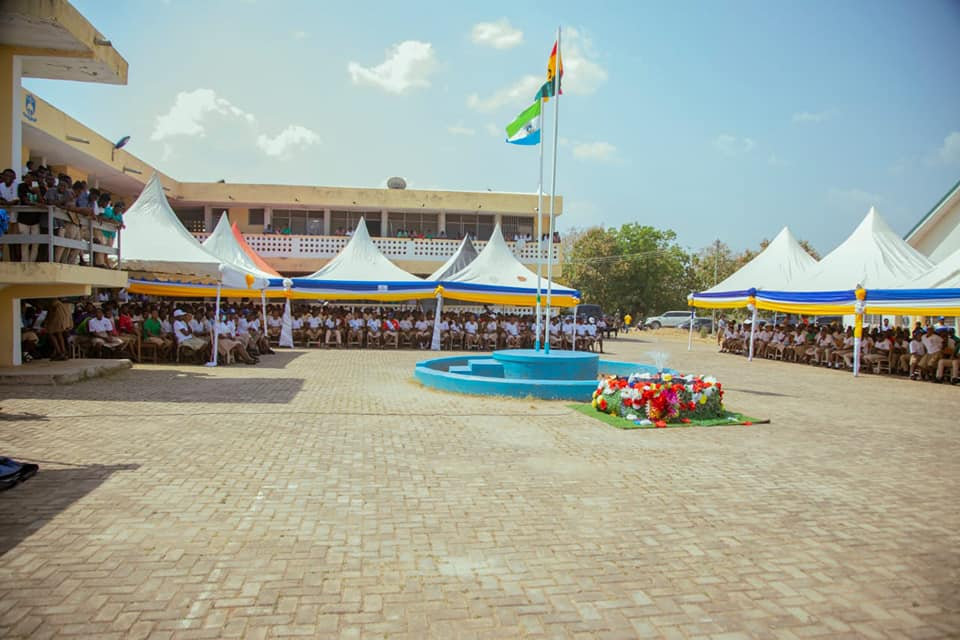
- Introduction
In the Upper West Region of Ghana, Wa Senior High School (WASEC) serves as a critical academic hub. Recent pedagogical research (Mensah et al., 2024) highlights that academic success in this regional context is not merely a product of infrastructure, but a direct result of the high “Self-Efficacy” of its teaching staff and the resilience of its students.
Classroom Insights: The Power of Self-Perception
Data from recent surveys at WASEC indicates that teachers who possess a high belief in their own pedagogical skills—despite resource constraints—tend to produce significantly higher WASSCE pass rates. This “teacher self-efficacy” manifests in the classroom through Adaptive Instruction, where teachers pivot their methods based on real-time student feedback rather than strictly following a rigid syllabus.
Key Findings:
- Peer-to-Peer Support: Students at WASEC prioritize “Social Learning.” Research suggests that informal study groups and peer-tutoring are the top-ranked factors for student confidence in Mathematics and Science.
- Resource Navigation: While access to digital tools is growing, the primary driver for academic efficiency remains “student cooperation” and “effective supervision” by school authorities.
- Localized Curriculum: Success is highest when abstract concepts are tied to local industries (e.g., agriculture or trade), making learning tangible for the student body.
Conclusion
The “Great WASEC” experience proves that while educational support systems are vital, the psychological empowerment of both teacher and student acts as the strongest predictor of academic excellence. For the 2026 academic year, the focus must shift toward sustaining these internal motivation systems to bridge the regional development gap.